AnajibVenture
Working prototype

The weave atlas.

The Weave Atlas is a working digital swatchbook proposed for Anajib Venture. Plan a first sample for a textile class, a handloom or a design studio. Pair a weave with a colourway, then trace a visible rib back to the threads that made it.

Open the swatchbook
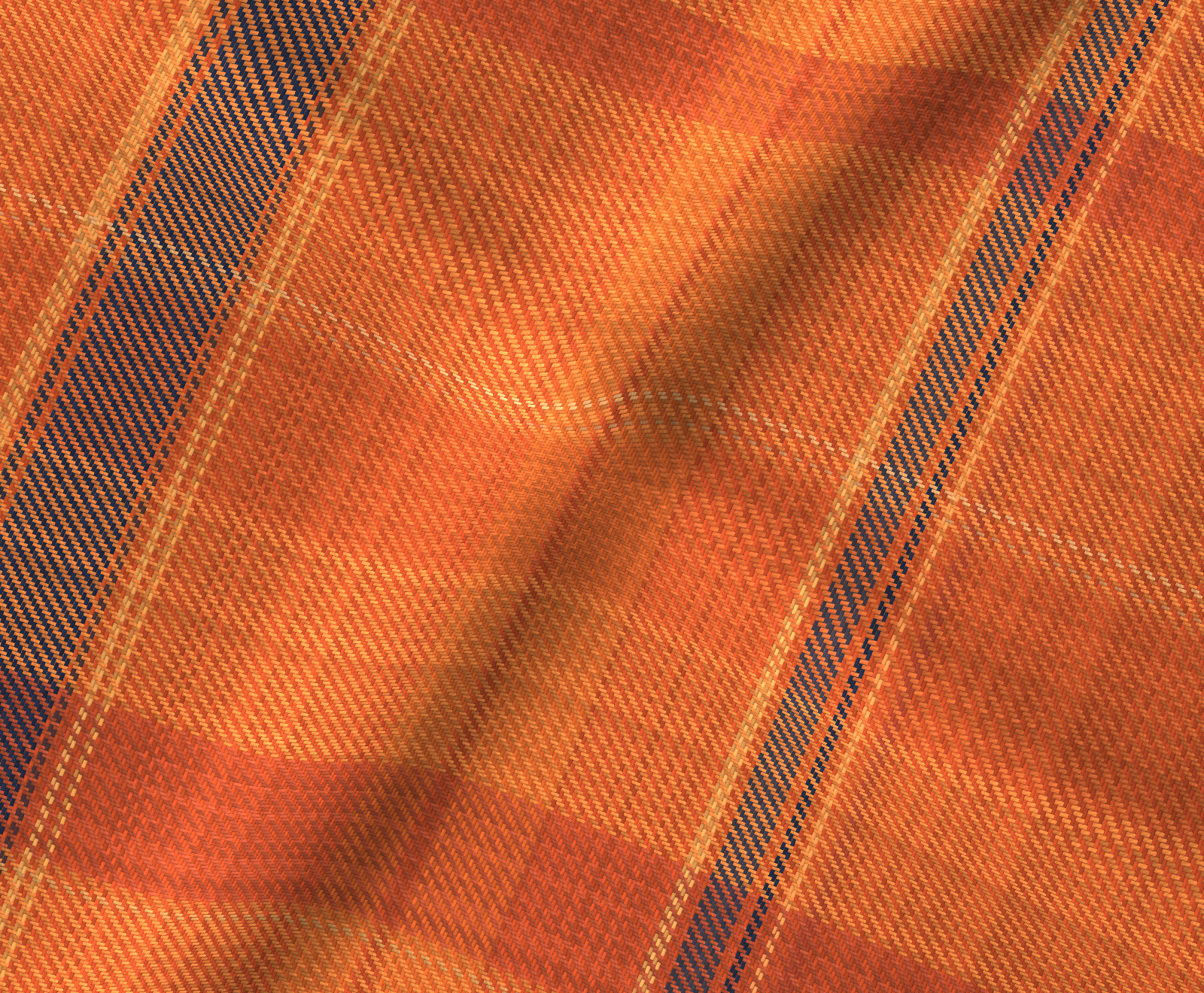
A close-up textile study with orange, madder and indigo threads.
Fig. 01   Colour studyWarp × Weft

The swatchbook

Start with the madder twill on the sample board. One piece has two views. The cloth face shows its surface. The draft shows which thread lies on top.

Sample ticketSW / 02 · A
View mode
Twill in Madder. The default crossing order appears in the sample ticket below.
Face view · digitally rendered yarn
Weave structure
Colourway

Twill

4 × 4 repeat

Two warp threads rise, then two fall. The offset shifts one place on each row, forming a diagonal rib.

Warp yarn
Oxide red
Weft yarn
Apricot

Reading
the cloth.

Keep one pair of yarns on the board and compare the three structures by the marks they leave.

Plain
2 × 2
Use this weave ↑
One end passes over, the next under. The following pick swaps their positions. Look for an even scatter of single squares. This is a useful starting point if a diagonal line would distract from a two-colour check in your own drawing.
Twill
4 × 4
Use this weave ↑
Each end stays above the weft for two picks and below it for two. The neighbouring end starts one pick later. Follow a dark pair from row to row to find the slope you saw on the face.
Herringbone
8 × 4
Use this weave ↑
Keep the two-over, two-under rhythm. After four ends the direction reverses with a break in the diagonal. Count across eight ends to see the whole repeat. Comparing only the first four can make it look like ordinary twill.

Follow one diagonal.

A cloth photograph gives you the colour of a stripe. Squared paper lets you follow individual threads, but every change of structure means drawing another grid. Use the board to move between those two ways of looking while you hold the yarn pair steady.

  1. Find the rib. Select Twill and Madder, then Cloth face. Look for a dark diagonal running through the apricot ground. In this pairing, oxide red runs lengthwise as the warp. Apricot crosses it as the weft.
  2. Count a repeat. Switch to Weave draft. Each column represents one end (a warp thread) and each row represents one pick (a pass of the weft). Inside the first outlined block, read four squares across and four down. A dark square puts warp uppermost. A light square exposes weft.
  3. Change one thing. Leave Twill selected and choose Indigo. The draft has exactly the same crossings. Return to Cloth face to see the rib in deep indigo and slate blue. Write down SW / 02 · B if this is the version you want to sample.
Twill · first repeatRead from the top left
E1E2E3E4
P1WFFW
P2WWFF
P3FWWF
P4FFWW

W = warp on top   /   F = weft on top

At the sampling table.

Copy the sample code, yarn names and repeat into your notebook, then add one observation of your own. The slip follows the sample on the board.

Code
SW / 02 · A
Structure
Twill
Repeat
4 × 4
Warp
Oxide red
Weft
Apricot

Limits of the screen

The atlas uses fixed digital colours and thread spacing. Check these four conditions on the loom before you judge the drape or match a dye lot.

  • Yarn diameter
  • Tension
  • Sett (ends per unit of width)
  • Finishing

How the image is made. For each end and pick, the browser calculates which thread crosses on top. The draft marks that decision with a square. The cloth view shades the two yarn colours across a tile sixteen ends wide and sixteen picks deep, then repeats it. Its rounded ridges and small flecks help the eye follow a thread.

Anajib Venture

Abdulazeez Muqodas, Founder

Choose a swatch to sample